
CMC sourcing knowledge hub
Sodium Carboxymethyl Cellulose (CMC) Sourcing & Application Guide
Identify the right CMC application family, translate process needs into comparable specifications, and qualify the proposed source through documents, samples and controlled application tests.
Quick answer
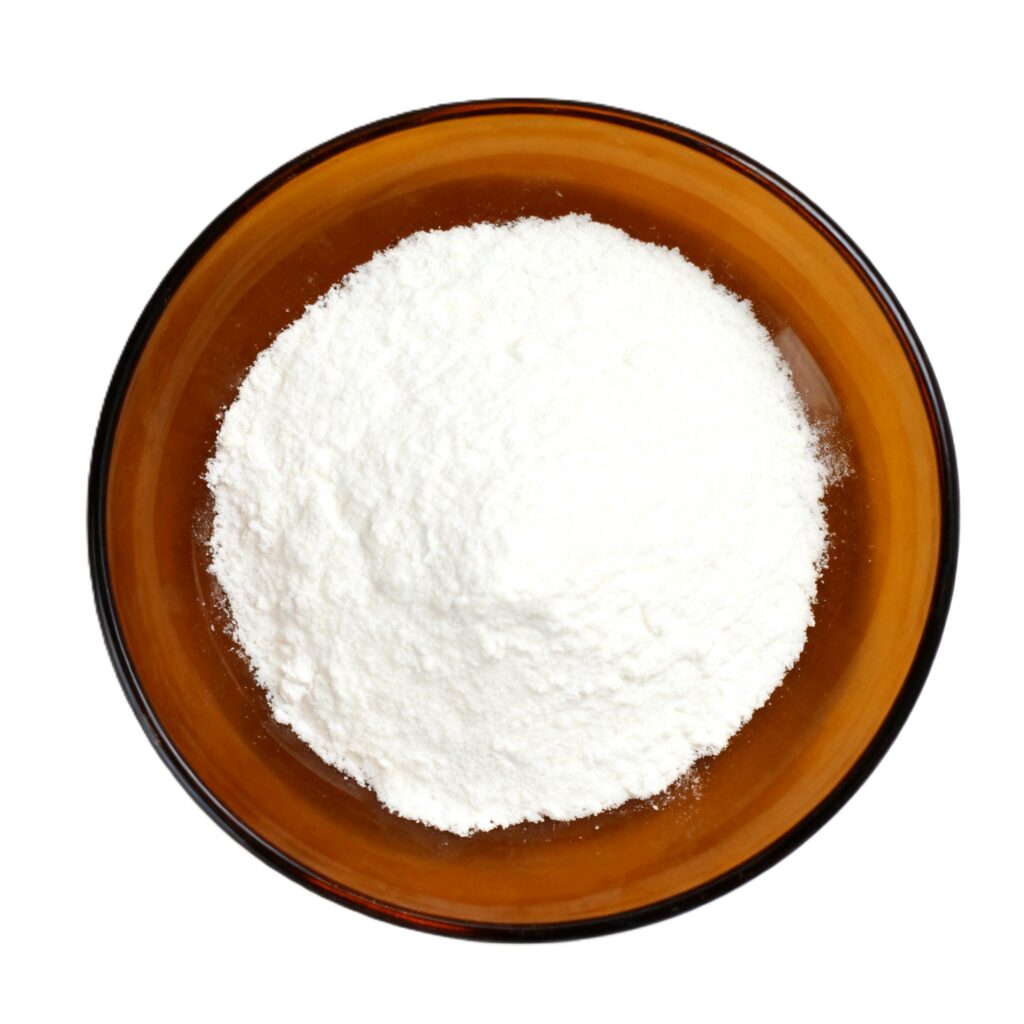
Sodium carboxymethyl cellulose is a cellulose-derived, water-soluble functional polymer. Buyers use CMC in food and industrial systems for functions such as viscosity control, water management, suspension or binding, but the right material depends on application chemistry, process conditions and a complete test method.
Start with the use point and measurable target. Then define identity, viscosity or rheology, degree of substitution, purity or impurity controls, particle and dissolution behaviour, documents and a sample-to-commercial-lot qualification plan. Do not select from a generic “CMC” label or one headline viscosity value.
CMC identity at a glance
| Identity field | Buyer reference | Important limit |
|---|---|---|
| Primary name | Sodium carboxymethyl cellulose | Confirm the full name and exact commercial grade/model |
| Common names | CMC, sodium CMC, NaCMC; cellulose gum in food context | A synonym does not define performance or food suitability |
| CAS | 9004-32-4 | A substance identifier is not a purchasing specification |
| Food-additive context | INS 466; E466 in EU legislation | Check current food category, use conditions and destination rules |
| Not identical | Sodium carboxymethyl starch (CMS) | CMS is starch-derived and must not inherit CMC identity or claims |
CMC application decision matrix
| Application route | First buyer question | Critical qualification focus |
|---|---|---|
| Food and beverages | What food category, function, process and destination? | Identity, method-defined viscosity, purity/microbiology and finished-formulation test |
| Paper wet end | What furnish, addition point and mill objective? | Solution quality, charge/process context and controlled machine trial |
| Paper sizing/coating | What binder/pigment system, solids and application method? | Rheology, water retention, filtration, runability and sheet result |
| Oilfield CMC/PAC | What base water, ions, solids, ageing and target? | Exact product identity, filtration and rheology under one fluid protocol |
| Battery electrodes | What active material, binder system and coating process? | Purity/trace metals, slurry rheology, coating and buyer-owned cell validation |
| Ceramic body | What body, forming, drying and firing route? | Make-down, green handling and dried/fired observations |
| Ceramic glaze/printing | What formulation, electrolytes and application equipment? | Rheology, suspension, filtration, application and fired defects |
| Instant make-down | What process bottleneck and application-ready time? | Wetting, residue, hydration curve and final performance |
| Powder/liquid detergent | What formulation, water and wash protocol? | Dispersion, electrolyte compatibility, storage and controlled wash test |
| Textile systems | What printing or sizing formulation and equipment? | Rheology, filtration, dissolution and application test before page publication |
| Mining systems | What ore, reagents, water and separation objective? | Selectivity and recovery evidence; no performance page without adequate test support |
| CMS alternative | Is the requested material starch-derived CMS? | Identity-specific documents and side-by-side application qualification |
CMC sourcing categories

Food Grade CMC
Formulation function, full viscosity method, identity, microbiology and destination-market evidence.
Oilfield CMC & PAC
Fluid chemistry, mixing, ageing, filtration and rheology under one controlled protocol.

Sodium Carboxymethyl Starch (CMS)
Starch-derived CMS sourcing with a strict identity boundary from cellulose-derived CMC.
Five-step CMC selection framework
| Step | Buyer action | Decision output |
|---|---|---|
| 1. Define use | Name the application, formulation/process, target function and destination | One application-specific sourcing brief |
| 2. Define methods | Specify analytical and application tests with conditions and units | Comparable supplier responses and samples |
| 3. Screen evidence | Cross-check source, TDS, COA, SDS and required declarations | Shortlist with open evidence items |
| 4. Qualify sample | Use coded, traceable samples against a control and fixed method | Documented technical approval or rejection |
| 5. Control supply | Confirm first lot, packing, COA, traceability and source-change rules | Commercial release and ongoing monitoring plan |
CMC parameter dictionary
| Parameter | What to record | What not to assume |
|---|---|---|
| Viscosity/rheology | Concentration, basis, water, temperature, preparation, instrument, geometry and speed | That unlike supplier values are comparable |
| Degree of substitution | Method, range, sampling and application context | That higher DS is universally better |
| Purity/impurities | Application-specific analytes, methods and limits | That “high purity” is a measurable specification |
| Moisture and pH | Conditioning, method and range | That one method or limit fits every grade |
| Particle profile | Sieve/distribution method, powder feeding and dust needs | That particle appearance proves dissolution |
| Dissolution/solution quality | Addition, water, shear, time, residue, gel or filtration method | That a lump-free beaker predicts plant behaviour |
| Application result | Control, formulation, conditions, repeats and endpoint | That a supplier case study guarantees the buyer result |
Documents buyers should request
| Document | Use in qualification | Control question |
|---|---|---|
| Controlled specification | Contractual parameters and acceptance rules | Which limits and methods are binding? |
| TDS | Grade profile, typical data and use guidance | Which values are typical versus specification? |
| COA | Lot-linked reported results | Does it identify the actual lot and agreed methods? |
| SDS | Safety, handling, storage and transport information | Does the product identity match the TDS and COA? |
| Declaration/certificate | Supports a specifically required claim | Do holder, source, product scope and dates match? |
| Sample/application report | Records buyer or supplier test context | Are sample identity, conditions and raw results traceable? |
How private supplier matching works
XiangtanExport first qualifies the buyer brief, then screens candidate supply sources against application, method, document and commercial requirements. Candidate identities, contacts, prices, original certificates and proprietary records remain restricted rather than becoming a public directory.
We describe ourselves as an independent sourcing and export coordination service. A sourcing category on this website does not mean XiangtanExport owns a factory or that every item is manufactured in Xiangtan. Exact source and capability are verified during a qualified inquiry.
CMC production equipment connection
CMC and other cellulose-derivative processes can include washing, de-liquoring and solvent-recovery interfaces. The material name does not select a centrifuge: the actual process stage, solvent composition, solids, rheology, washing sequence, recovery route, containment and nitrogen requirements must be reviewed.
A decanter can be one candidate for a suitable suspension and settling duty; filtering or batch principles may remain relevant elsewhere. No principle, material or explosion-protection configuration is confirmed without source-specific engineering and evidence.
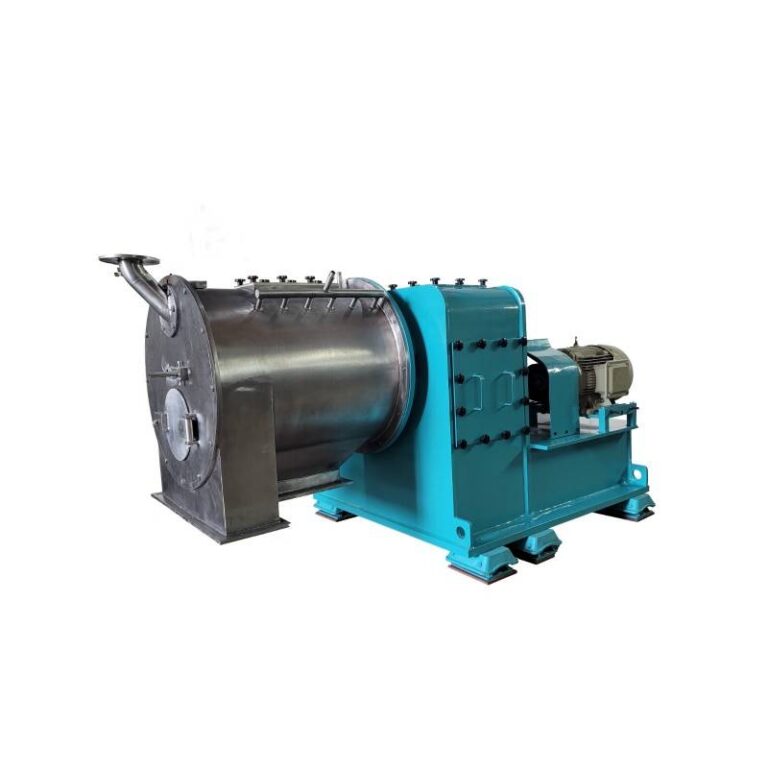
CMC process centrifuge selection
Connect solvent, washing, rheology and recovery data to a neutral principle screen.

CMC buyer guides
What Is Sodium Carboxymethyl Cellulose?
Identity, naming, functions and the limits of a grade label.
Food, Paper and Oilfield CMC Compared
Why application families require different evidence and tests.

CMC Viscosity Test Methods
Control concentration, water, temperature, hydration, instrument and speed.
How to Qualify a CMC Supplier in China
Connect entity, source, grade, documents, sample and first commercial lot.
Key facts
- CMC identity and application grade are separate decisions
- Application, method and source-specific evidence control qualification
- CMS is starch-derived and is not presented as another CMC name
- Food, oilfield, battery or other performance/compliance claims are not generalized across sources
- Final availability, specification, documentation and compliance evidence are confirmed for the selected source and application
Buyer checklist
- Choose one application route and define the target function
- State complete methods, conditions and units
- Separate typical data from contractual limits
- Request source-consistent TDS, COA and SDS
- Approve a traceable sample in the real application
- Confirm the first commercial lot and change-notification rules
Common mistakes
- Comparing one viscosity number from unlike methods
- Treating a grade label, CAS number or food-additive number as proof of suitability
- Using the same qualification plan for unrelated applications
- Confusing CMS with CMC or CMC with PAC
- Approving a sample that is not linked to the proposed commercial source
- Publishing supplier identities or certificates without permission and scope review
Sources & references
Identity sources: FAO/JECFA sodium carboxymethyl cellulose entry, Codex GSFA INS 466 entry, and Commission Regulation (EU) No 231/2012 for EU E466 context. Accessed 7 September 2026.
Application and supplier evidence remains source-specific. Private TDS, COA, SDS, certificates, test reports, contacts and commercial terms are reviewed during qualification and are not reproduced publicly.
Products and application references

From requirement to sourcing decision
Define
Application, specification, quantity, destination and evidence needs.
Compare
Align supplier responses, methods, exclusions and commercial basis.
Verify
Check the agreed company, product, document or on-site scope.
Control
Record samples, approvals, changes, inspection and shipment milestones.
Close
Deliver the agreed record, open-item list and next-step decision.
Related sourcing and trade services
Frequently asked questions
Is every CMC grade interchangeable?
No. Application conditions, methods, purity or impurity needs, molecular/viscosity profile, particle form and source controls can differ.
What should a buyer send first?
Send the application, formulation or process conditions, target function, complete test methods, quantity, destination, packing and document list.
Does XiangtanExport manufacture CMC?
XiangtanExport is an independent sourcing and export coordination service. The proposed manufacturing source is checked and disclosed within the qualified project process.
Can a food or industrial grade be approved from the TDS alone?
No. Review consistent source documents, applicable requirements, a traceable sample and application-specific tests.
Send us your sourcing requirement
Share the specification, quantity, destination and required documents. We will review the request before matching a suitable supply source.
Review and evidence note
Last reviewed: 2026-09-07
Public identity references are verified. Commercial grades, supplier identities, certifications, application results and availability remain source- and project-specific.
Final product availability, specification, documentation and commercial terms are confirmed during supplier matching and quotation.