
CMC application sourcing
Food Grade Sodium Carboxymethyl Cellulose (CMC)
Food grade sodium carboxymethyl cellulose is selected for a defined formulation, process and market—not from the words “food grade” alone. We translate the application into comparable technical, document and sample-test requirements.
Sourcing Reference XTE-CMC-FOOD-001

Quick answer
Send the food category, intended function, dosage range, formulation, water quality, pH, temperature, shear, hydration sequence and target result. Add the destination market and the exact documents or standards your compliance review requires.
CMC, sodium CMC, NaCMC and cellulose gum can identify the same substance in context; international food-additive references use INS 466, while EU legislation uses E466. Those identifiers do not by themselves prove that a particular source, grade or use is compliant.
Where formulation conditions change the result
Hydration order, competing solids, sugar or salt, pH, temperature and shear can change dispersion and apparent viscosity. A useful sample plan reproduces the buyer process instead of testing powder in ideal laboratory water only.
For beverages and suspended systems, record stability and mouthfeel under the real process. For bakery, sauces or frozen systems, define the measurable role CMC is expected to perform and compare against the current formulation baseline.
Food application sample plan
| Stage | Control | Decision |
|---|---|---|
| Identity screen | Approved method, appearance, pH, moisture and other buyer-defined incoming checks | Is the sample the requested material and grade family? |
| Solution preparation | Same water, concentration, mixing, hydration time and temperature | Does it disperse and hydrate within the process window? |
| Bench formulation | Same recipe, dosage and processing sequence as the control | Does the target function improve without unacceptable side effects? |
| Scale confirmation | Production-relevant equipment, hold time, filling and storage checks | Is the result repeatable before commercial approval? |
Food formulation and qualification references

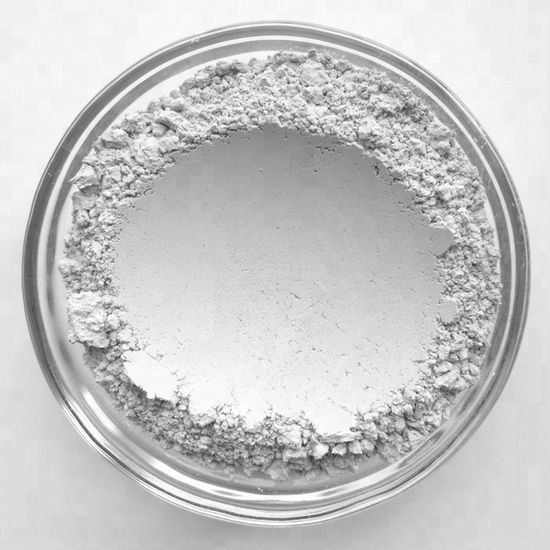

Key facts
- Sourcing reference: XTE-CMC-FOOD-001
- Identity context: sodium carboxymethyl cellulose / cellulose gum; CAS 9004-32-4; INS 466; EU E466
- Food-category, use-level and destination rules require current market-specific review
- No certification, microbiological result or regulatory approval is claimed for an unnamed source
Key purchasing specifications
Use a complete method and buyer limit for every reported value; do not compare isolated numbers from unlike test conditions.
| Parameter | RFQ definition | Buyer interpretation |
|---|---|---|
| Identity and purity | Named reference, test method and acceptance criteria | Confirms the offered grade is evaluated under the required framework |
| Viscosity | Concentration, water, temperature, instrument, spindle, speed, hydration and range | Only method-matched results are comparable |
| Degree of substitution | Buyer range and method | May affect solubility, tolerance and interaction; application testing remains necessary |
| Particle profile | Sieve or distribution method plus dispersion expectation | Connects powder form to make-down equipment and lump risk |
| Microbiology and contaminants | Food category, destination, sampling, methods and limits | Must be confirmed for the exact lot and applicable market |
Typical applications
- Beverage and suspended systems after formulation validation
- Sauces, dressings and prepared-food texture systems
- Bakery, filling and confectionery applications
- Frozen, dairy-style and plant-based formulations subject to buyer testing
Available options
Availability depends on the selected supply source. Confirm every option during quotation.
- Method-defined viscosity families
- Buyer-defined particle or dispersion profile
- Application sample quantities subject to confirmation
- Destination- and use-specific document review
Quality and technical considerations
The lot COA should use methods linked to the purchase specification. A TDS value and a COA result serve different purposes, and neither replaces formulation validation.
Food-additive database entries describe identity and permitted contexts. The importer or qualified adviser must confirm current rules, use conditions, labels and limits for the destination and finished food.
Packaging and delivery
Define food-contact expectations, inner liner, bag closure, net weight, lot code, allergen or contamination controls where applicable, moisture protection, pallets and label language.
Final packing and delivery terms are confirmed during quotation.
Documents buyers should request
Document availability varies by supply source and exact grade or configuration. We confirm the available document set before quotation.
- Controlled grade specification and current TDS
- Lot-linked COA with methods and agreed food-related parameters
- Current SDS and transport or handling information
- Source- and product-specific regulatory statements requested for the destination and use
- Traceability, change-notification and food-safety evidence within the agreed scope
Buyer checklist
- Name the finished food category and target function
- Provide the complete viscosity test method, not only a number
- Define microbiology and contaminant limits by destination
- Repeat the actual hydration and formulation process during sample testing
- Link approval to the manufacturing source, specification and change control
Common mistakes
- Treating INS 466 or E466 as proof that every grade and use is approved
- Comparing viscosity values from different concentrations or instruments
- Approving powder appearance without a finished-formulation trial
- Requesting certificates without checking holder, product scope and validity
- Failing to define what happens if the commercial lot differs from the approved sample
What we need to quote
- Food category, recipe context and target function
- Dosage, water, pH, salt or sugar, temperature, shear and hydration process
- Complete viscosity method and target range
- Identity, purity, DS, particle, microbiology and contaminant criteria
- Destination market and required document list
- Sample quantity, commercial quantity, packing and delivery terms
Related sourcing and trade services
Why source through XiangtanExport
XiangtanExport reviews the buyer requirement before matching a suitable source. We coordinate specifications, document requests, samples or material tests, quotation details and export follow-up while keeping factory-specific commercial information confidential.
XiangtanExport is an independent sourcing and export coordination service. It does not claim to own the factories represented by its sourcing network.
Related buyer guides

Frequently asked questions
Does E466 or INS 466 prove a quoted CMC is suitable for my product?
No. They provide identity or regulatory context. Confirm the exact source, grade, finished-food category, use conditions and current destination rules.
Can two food grade CMC samples with the same viscosity be equivalent?
Not necessarily. The methods, substitution, purity, particle profile, solution behaviour and formulation result may differ.
What is the best first sample test?
Use a controlled make-down followed by the real bench formulation against the current control, with all water, process and dosage conditions recorded.
Sources & references
Identity context: FAO/JECFA sodium carboxymethyl cellulose entry and Codex GSFA INS 466 entry. EU naming and specifications should be checked in the current consolidated Commission Regulation (EU) No 231/2012. Accessed 7 September 2026.
Source-specific TDS, COA, declarations and certificates are evaluated privately for the quoted source and are not reproduced here.
Send us your sourcing requirement
Share the specification, quantity, destination and required documents. We will review the request before matching a suitable supply source.
Review and evidence note
Last reviewed: 2026-09-07
Food-additive identifiers are verified from public official sources. No source-specific food compliance, certification, result or application performance is claimed.
Final product availability, specification, documentation and commercial terms are confirmed during supplier matching and quotation.