
CMC application sourcing
Battery Grade CMC for Water-Based Electrode Processing
Battery grade CMC is not selected from viscosity alone. The buyer should connect material identity and impurity controls to water-based slurry preparation, coating, drying and its own electrode and cell validation route.
Sourcing Reference XTE-CMC-BATT-001

Quick answer
Provide electrode chemistry, active material and morphology, conductive additive, co-binder, solids, mixing sequence, water quality, target slurry rheology, coating equipment, loading, drying conditions and the buyer’s cell-validation gate.
Define purity, moisture, pH, degree of substitution, molecular or viscosity test, particle/dispersion profile and trace-metal panel with methods. Do not accept cycling, adhesion or yield claims unless they are tied to the same formulation, process and cell design.
Qualification from powder to cell
| Gate | Controlled work | Release question |
|---|---|---|
| Material | Identity, moisture, impurities, DS and method-defined rheology | Does the sample meet the buyer’s incoming screen? |
| Slurry | Fixed recipe, water, addition sequence, mixing and hold time | Are dispersion, rheology and stability acceptable? |
| Coating | Fixed loading, equipment, drying and environmental conditions | Are coatability, defects and adhesion within buyer limits? |
| Cell | Buyer-controlled electrode and cell design with agreed statistics | Does the material pass the buyer’s performance and safety gate? |
Electrode-system disclosure
Graphite-dominant and silicon-containing anodes may not place the same demands on binder distribution, elasticity and process control. The silicon type, fraction and surface treatment should be disclosed before candidate selection.
Public benchmark data can guide questions, but it cannot establish equivalence to a quoted grade. Source-specific documents and buyer experiments control the decision.
Battery application and material-screening references

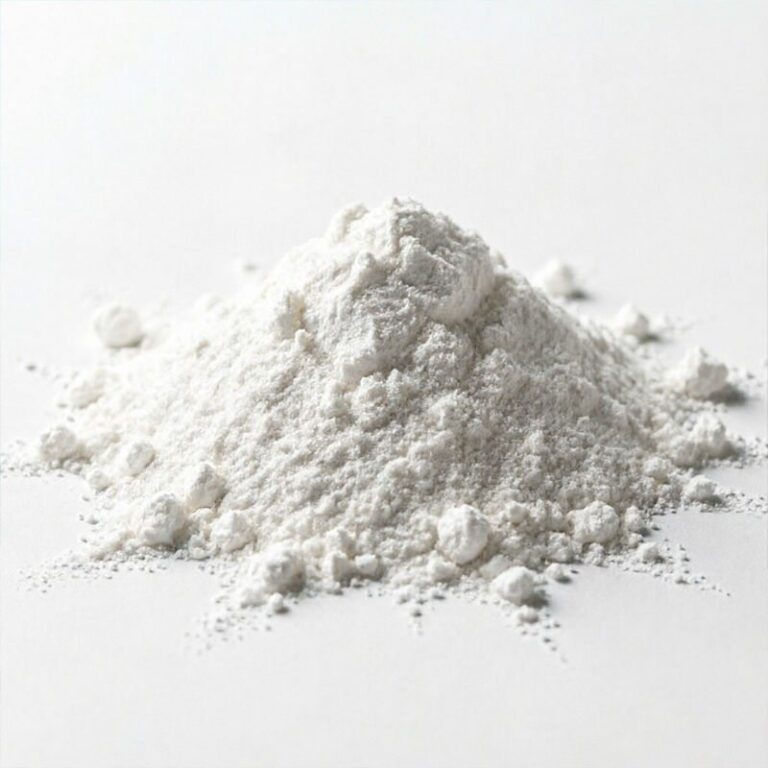

Key facts
- Sourcing reference: XTE-CMC-BATT-001
- Candidate selection is electrode- and process-specific
- Trace-metal and impurity panels must be buyer-defined with methods
- No cycle life, capacity retention, adhesion or production-yield result is promised
Key purchasing specifications
Use the buyer’s controlled methods and material limits; generic “battery grade” labels are not sufficient.
| Parameter | RFQ definition | Buyer interpretation |
|---|---|---|
| Purity and trace metals | Named analytes, sampling, digestion/instrument methods and limits | Supports the buyer contamination-risk screen |
| DS and molecular profile | Method-defined DS plus molecular or viscosity control | Helps screen solubility and slurry response; does not predict cell performance alone |
| Moisture and pH | Conditioning and test methods with limits | Supports storage, batching and process consistency |
| Particle/dispersion | Distribution, dissolution and filtration or gel checks | Connects powder behaviour to slurry preparation |
| Application gate | Slurry, coating and cell test design | Buyer-owned evidence for final qualification |
Typical applications
- Water-based anode slurry programs
- Graphite-dominant systems after buyer validation
- Silicon-containing systems after system-specific qualification
- Battery research and pilot manufacturing under buyer controls
Available options
Availability depends on the selected supply source. Confirm every option during quotation.
- Candidate grades screened by buyer-defined purity and rheology
- Particle and dissolution profiles subject to source availability
- Laboratory sample coordination
- Clean, moisture-controlled packing requirements subject to confirmation
Quality and technical considerations
Use a change-control agreement covering manufacturing source, controlled specification and notification. Battery qualification is expensive to repeat, so the evidence chain should connect the sample, lot, source and approved process.
The buyer remains responsible for electrochemical, safety, process and regulatory validation.
Packaging and delivery
Define inner packaging, moisture barrier, contamination controls, closure, lot coding, pallet protection, warehouse conditions and any clean handling or sampling requirements.
Final packing and delivery terms are confirmed during quotation.
Documents buyers should request
Document availability varies by supply source and exact grade or configuration. We confirm the available document set before quotation.
- Battery-application TDS and controlled source specification
- Lot COA with buyer-agreed methods
- Trace-metal or impurity report within the agreed panel
- Current SDS, handling and storage guidance
- Source identity, lot traceability and formal change-notification information
Buyer checklist
- Disclose active-material system and silicon content where relevant
- Define impurity and trace-metal methods
- Control slurry recipe and mixing sequence
- Separate coating observations from cell-performance conclusions
- Require lot/source linkage and change notification
Common mistakes
- Selecting by one viscosity number
- Using supplier cell data from a different electrode design as a guarantee
- Leaving the trace-metal method or sample preparation undefined
- Changing mixing sequence while comparing candidates
- Approving a sample without locking the source and change controls
What we need to quote
- Electrode chemistry, active material and conductive/binder system
- Slurry solids, water, mixing, hold, rheology and coating conditions
- Purity, trace-metal, DS, moisture, pH and particle methods
- Sample quantity and staged qualification gates
- Commercial demand, source-change controls and packing
- Destination and required technical documents
Related sourcing and trade services
Why source through XiangtanExport
XiangtanExport reviews the buyer requirement before matching a suitable source. We coordinate specifications, document requests, samples or material tests, quotation details and export follow-up while keeping factory-specific commercial information confidential.
XiangtanExport is an independent sourcing and export coordination service. It does not claim to own the factories represented by its sourcing network.
Related buyer guides
CMC Degree of Substitution Guide
Understand what DS reports and why application testing still matters.
Frequently asked questions
Is higher viscosity always better for a battery slurry?
No. The useful rheology window depends on recipe, solids, mixing, coating and the buyer’s process.
Can supplier cycling data qualify a grade?
Not by itself. It is contextual evidence; the buyer should validate the material in its own controlled electrode and cell design.
Should graphite and silicon-containing anodes use the same screening plan?
Do not assume so. Disclose the material system and build a qualification plan around its process and binder demands.
Sources & references
Application benchmark reviewed: Ashland, CMC binders for lithium-ion batteries. It is used only to inform buyer questions; it is not evidence for any quoted source. Accessed 7 September 2026.
Source-specific specifications, impurity reports and application results remain private evidence and must be matched to the buyer’s test system.
Send us your sourcing requirement
Share the specification, quantity, destination and required documents. We will review the request before matching a suitable supply source.
Review and evidence note
Last reviewed: 2026-09-07
No electrochemical, adhesion, cycle-life, yield or clean-manufacturing claim is made for an unnamed source. Buyer qualification controls release.
Final product availability, specification, documentation and commercial terms are confirmed during supplier matching and quotation.