
CMC fundamentals
What Is Sodium Carboxymethyl Cellulose (CMC)?
Sodium carboxymethyl cellulose is a water-soluble cellulose derivative used as a functional material across food and industrial formulations. Its name identifies a substance family; it does not define one universal grade or performance specification.
Direct answer
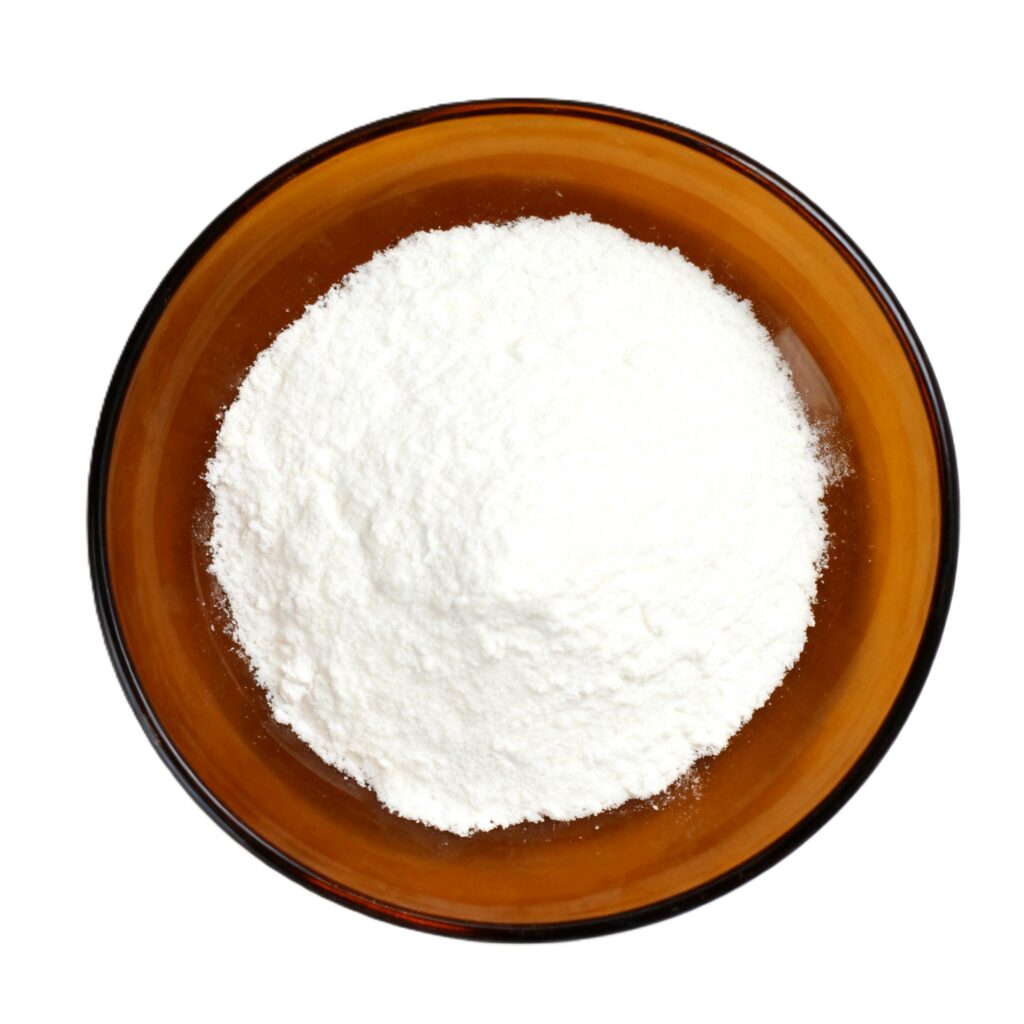
Sodium carboxymethyl cellulose—often shortened to CMC, sodium CMC or NaCMC—is a modified cellulose polymer used to influence viscosity, water management, suspension, binding or related formulation behaviour. “Cellulose gum” is a food-context synonym. CAS 9004-32-4 is widely used for the substance.
Food-additive references identify it as INS 466, while EU legislation uses E466. These identifiers describe identity and regulatory context; they do not prove that every commercial grade, source, use level or destination-market application is compliant.
Identity and naming
| Term | Meaning in context | Buyer caution |
|---|---|---|
| CMC / sodium CMC / NaCMC | Common commercial shorthand for sodium carboxymethyl cellulose | Confirm the full identity, grade/model and source specification |
| Cellulose gum | Food-context synonym used in official references | Do not transfer food suitability to an industrial grade |
| CAS 9004-32-4 | Substance identifier commonly associated with sodium CMC | A CAS number is not a performance or compliance specification |
| INS 466 / E466 | Food-additive identification or regulatory naming context | Permitted uses and conditions depend on current applicable rules |
| CMS | Carboxymethyl starch, a starch-derived material | CMS is not another name for cellulose-derived CMC |
A practical buyer decision path
Define
Application, specification, quantity, destination and evidence needs.
Compare
Align supplier responses, methods, exclusions and commercial basis.
Verify
Check the agreed company, product, document or on-site scope.
Control
Record samples, approvals, changes, inspection and shipment milestones.
Close
Deliver the agreed record, open-item list and next-step decision.
Why it matters
A buyer can receive samples with the same chemical family name but different substitution, molecular profile, purity, particle form, solution behaviour and application fit.
Identity screening, analytical specifications and application trials answer different questions. Use all three before approving a commercial source.
Buyer decision criteria
- Full chemical identity and grade/model
- Intended application and target function
- Viscosity or rheology with complete test method
- Degree of substitution and other application-relevant analytical controls
- Purity, impurities, microbiology or trace metals as the use requires
- Particle, dissolution and solution-quality behaviour
- Destination rules, documents and source change control
Specification checklist
| Decision layer | Question | Evidence |
|---|---|---|
| Identity | What exact substance and grade is offered? | Controlled specification, identification method and consistent TDS/SDS/COA naming |
| Analytical control | Which properties define lot consistency? | Methods, acceptance ranges and lot COA |
| Application | Does it work in the buyer system? | Controlled bench, pilot or production-relevant trial |
| Compliance | Which current rules and documents apply? | Destination- and use-specific qualified review |
| Commercial control | Will the approved source and grade stay controlled? | Traceability and change-notification terms |
Document checklist
- Controlled grade specification
- Current TDS using the same product identity
- Lot-linked COA with test methods
- Current SDS
- Use- and destination-specific declarations or certificates only where required
- Sample identity, source linkage and change-notification information
Common mistakes
- Treating CMC as one interchangeable commodity
- Using food-additive identifiers as universal approval
- Comparing viscosity without matching the method
- Confusing CMS and CMC
- Approving a sales name without locking source and specification
Questions to ask suppliers
- What full chemical and grade identity appears consistently across the TDS, COA and SDS?
- Which parameters and methods control commercial lots?
- Which data were generated in conditions close to our application?
- Which claims are supported for the exact source and destination?
- What changes require customer notification or requalification?
Related products and pages




Frequently asked questions
Is CMC the same as cellulose gum?
Cellulose gum is a recognized food-context synonym for sodium carboxymethyl cellulose. The synonym does not make every industrial grade suitable for food.
Is CMC the same as CMS?
No. CMC is cellulose-derived; CMS is starch-derived. Their identities, specifications and application evidence must stay separate.
What is the first purchasing decision?
Define the application, target function and complete test method before asking suppliers to recommend a grade.
Sources & references
Official identity references: FAO/JECFA sodium carboxymethyl cellulose and Codex GSFA INS 466. EU naming and specification context: Commission Regulation (EU) No 231/2012. Accessed 7 September 2026.
Public identity references do not validate a quoted grade, use or source. Those require source-specific evidence.
Send us your sourcing requirement
Share the specification, quantity, destination and required documents. We will review the request before matching a suitable supply source.
Review and evidence note
Last reviewed: 2026-09-07
Identity terminology is supported by official public references. The guide does not confirm a commercial grade, source, compliance status or application result.
Final product availability, specification, documentation and commercial terms are confirmed during supplier matching and quotation.