
Industrial Centrifuge Sourcing
Pusher Centrifuge for Continuous Crystal Separation
A pusher centrifuge is a continuous filtering principle considered for free-draining crystalline or granular solids when the cake can form on a screen and tolerate staged axial transport. Suitability must be demonstrated with representative process data.
Sourcing Reference XTE-CEN-PSH-001
Direct answer
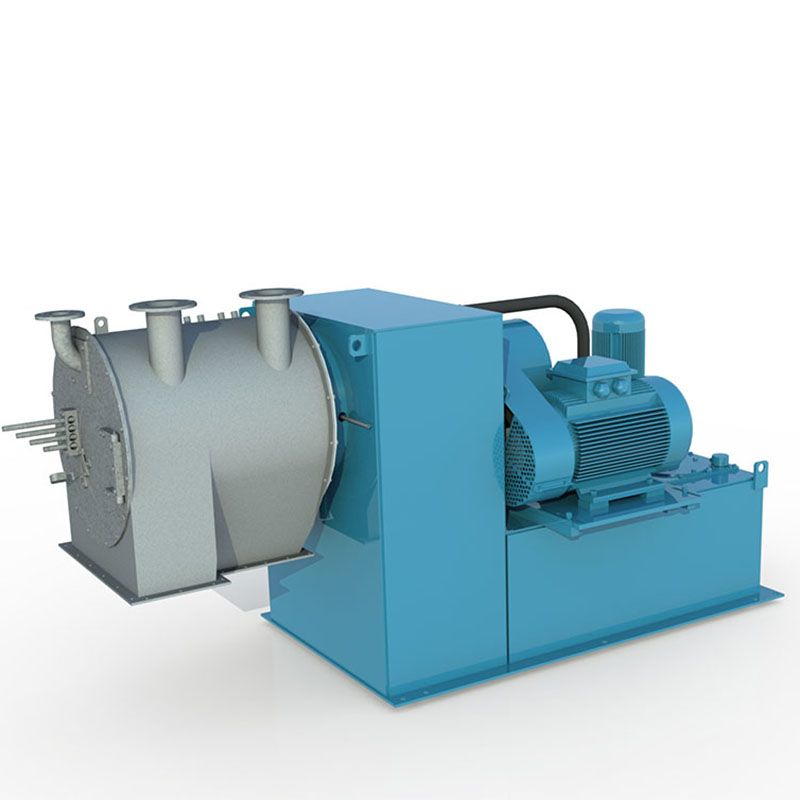
A pusher centrifuge continuously forms a cake on a filtering basket and advances it toward discharge through reciprocating pushing action. It may suit free-draining crystals with a stable feed and acceptable breakage tendency. It is not selected from chemical name or capacity alone; screen retention, liquor behaviour, washing, crystal strength and the operating envelope need review and often representative testing.
When is this centrifuge a good fit?
| Good-fit tendency | Poor-fit or review trigger |
|---|---|
| Free-draining crystals can form a stable filter cake. | Fine suspended solids do not retain or drain reliably on a screen. |
| Continuous solids handling is preferred. | Feed variability prevents stable cake formation. |
| Screen retention is credible for the representative particle distribution. | The solids are very compressible, sticky or difficult to discharge. |
| Wash duty can be defined and evaluated on the formed cake. | Breakage sensitivity has not been tested. |
| Crystal handling can tolerate the proposed transport action. | Containment, cleaning or batch segregation requirements point to another arrangement. |
This is a routing screen, not a machine selection or performance guarantee. Final selection requires qualified process review and, where useful, representative material testing.
What process data are required?
Selection begins with a feed envelope and required result, not with capacity alone. The same named chemical can behave differently because crystal distribution, mother liquor, solids concentration, temperature, upstream conditioning and wash duty differ.
Unknown values should be marked unknown and closed through a representative test or agreed engineering assumption. They should not be silently replaced by catalogue data.
| Data group | Buyer input | Why it changes the review |
|---|---|---|
| Material identity | Product, solids, liquid phase and known contaminants | Prevents an equipment name from being treated as a complete duty definition. |
| Particle behaviour | Distribution, shape, fragility, density and settling or filtration observations | Supports the first principle screen and representative test plan. |
| Feed envelope | Minimum, normal and maximum flow; solids concentration; variability; batch or continuous operation | Defines the operating window rather than a single nominal point. |
| Liquid properties | Composition, viscosity, density, pH, chloride or other corrosion contributors, and temperature | Guides wetted-material, sealing, cleaning and safety review. |
| Separation targets | Cake moisture or dry solids, recovery, filtrate or centrate target, purity and allowable breakage | Turns a general request into measurable acceptance criteria. |
| Washing duty | Wash liquid, stage, ratio or sequence and purity objective | Changes residence, cake handling and test requirements. |
| Upstream/downstream | Feed conditioning, crystallizer or reactor, pumps, dryer, recovery and handling equipment | Identifies interface limits and control dependencies. |
| Site and utilities | Indoor/outdoor, area classification, ambient range, altitude, power, water, air and nitrogen | Controls installation scope and source-specific option review. |
| Documents and destination | Country, electrical basis, inspection, FAT, SAT, manuals and buyer-required conformity evidence | Prevents document and compliance gaps after commercial comparison. |
How does the working principle affect separation?
Feed enters a rotating filtering section. Liquid passes through the cake and screen while solids remain. A reciprocating pusher mechanism advances the cake through successive zones that can include de-liquoring and washing before solids discharge.
The actual number of stages, screen arrangement, wash location and discharge design are source-specific. Public diagrams show the decision sequence only and are not construction drawings.
Which design choices must be confirmed?
The buyer should compare source proposals against one controlled data sheet. Each deviation needs a technical effect, commercial effect and disposition before price comparison.
| Choice | Required confirmation |
|---|---|
| Wetted materials | Exact grade, component scope, corrosion basis and evidence; do not rely on a generic “stainless steel” description. |
| Separation element | Screen, cloth, bowl or wear-part arrangement and how it relates to the tested feed. |
| Feed and discharge | Interfaces, operating envelope, blockage or upset response, and downstream handling responsibility. |
| Drive and controls | Motor and drive basis, interlocks, monitoring, PLC boundary, protocol and buyer control philosophy. |
| Sealing and containment | Process hazards, leakage boundary, ventilation or inerting requirement, and source evidence. |
| Cleaning and access | Cleaning method, access points, changeover expectation and safe maintenance isolation. |
| Wear and maintenance | Expected wear locations, inspection method, replacement procedure and recommended spares. |
| Installation scope | Foundation loads, layout, lifting, piping, cabling, commissioning and exclusions. |
What should a performance guarantee include?
A performance value without feed and test boundaries is not comparable. Define how, where and when each result will be measured, who witnesses it, and what happens if the agreed criterion is missed.
| Result | Boundary that must be written down |
|---|---|
| Throughput | Feed composition, solids basis, temperature, operating time and variability. |
| Cake result | Sampling point, moisture or dry-solids method, sample conditioning and averaging rule. |
| Recovery | Mass-balance boundary, sampling interval, analytical method and allowable unaccounted loss. |
| Liquid quality | Filtrate or centrate sampling location, solids method and stable-operation condition. |
| Washing or purity | Wash sequence, liquid, ratio, analysis method and feed impurity envelope. |
| Crystal integrity | Particle-size method, before/after sampling and allowable change where breakage matters. |
| Mechanical acceptance | Vibration, temperature, leakage, interlock and run-test method agreed for the actual source. |
This page explains selection logic. It does not confirm a supplier, machine size, performance guarantee, material compatibility or certification. Those items are verified against the chosen source and project specification.
What should be tested before purchase?
Material testing, design review, FAT and SAT answer different questions. A no-load factory run cannot demonstrate process performance, while a site trial cannot correct an unfrozen interface without cost and delay.
| Stage | Purpose | Buyer record |
|---|---|---|
| Representative material test | Check separation behaviour and reveal missing data before final selection. | Sample identity, conditioning, settings, mass balance, observations and result method. |
| Design review | Freeze interfaces, materials, controls, documents and agreed guarantee basis. | Approved data sheet, drawings, deviation register and responsibility matrix. |
| Factory acceptance test (FAT) | Verify the agreed factory-test scope before release. | Protocol, calibrated instruments where applicable, raw readings, nonconformities and signed disposition. |
| Site acceptance test (SAT) | Check installation, utilities, feed condition and project performance under the agreed site basis. | Commissioning record, feed envelope, sampling, results, open items and remedies. |
Documents and export scope
The contract should identify required documents, submission timing, review status and final language. Checking a standards title does not establish source-specific compliance.
- Approved technical data sheet and supplier deviation list
- General arrangement, interface, foundation-load and lifting information
- Wetted-material schedule and source-specific material evidence requested by the buyer
- Motor, drive, instrument, interlock and control-system documentation
- Inspection and test plan with hold or witness points
- Material-test, FAT and SAT protocols and records where included
- Safety, operation, cleaning and maintenance manuals in the agreed language
- Spare-parts, wear-parts and recommended maintenance list
- Packing, preservation, lifting marks and shipping-document requirements
- Destination-specific conformity evidence requested by the buyer; availability remains subject to source confirmation
Material and application routes
Salt crystallization
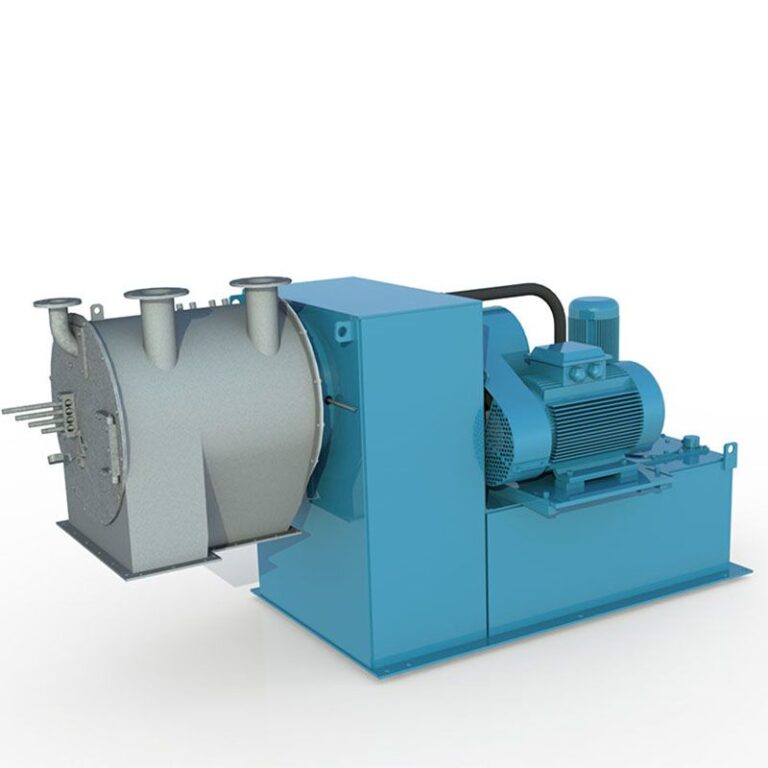
Screen salt slurry, crystal and wash data before choosing a continuous filtering route.
Representative equipment references
What we need for technical review
- Material and liquid identities, composition and safety data where applicable
- Particle distribution, shape, fragility and available settling or filtration observations
- Feed solids, temperature, viscosity, pH, density and minimum/normal/maximum feed rate
- Target cake result, recovery, liquid clarity, purity, washing and allowable breakage
- Operating mode, upstream/downstream equipment and known problems with the current method
- Wetted-material, corrosion, abrasion, containment and area-classification requirements
- Site, utilities, controls, destination, inspection and document requirements
- Available process data sheet, P&ID, layout, photos, lab report, particle report or current nameplate
Related sourcing and trade services
Independent sourcing boundary
XiangtanExport is an independent sourcing and export coordination service. It is not presented as the machine manufacturer and does not publish a supplier directory on this page.
Source identity, model, commercial terms, certificates and source-specific capability evidence are reviewed privately against the buyer requirement.
Frequently asked questions
Can a pusher centrifuge be selected from hourly capacity?
No. Capacity must be tied to feed composition, solids loading, particle behaviour, temperature, wash duty and required result.
Is every salt slurry suitable for a pusher centrifuge?
No. The chemical name does not establish screen retention, drainage, cake formation or breakage behaviour.
How should cake moisture be specified?
State the sampling point, analytical method, feed envelope, stable-operation condition and averaging rule.
Can washing performance be guaranteed from a catalogue?
No. Define wash liquid, sequence, ratio, feed impurity basis and analytical method, then test or engineer against that basis.
Does this page confirm explosion-protection availability?
No. Area classification and requested standards are buyer inputs; source-specific availability and evidence require review.
What is the next step?
Submit the process data sheet and available sample or test information for missing-data review and private source matching.
Sources & references
GB 19815-2021, Centrifuge—Safety requirements, National Public Service Platform for Standards, published 2021-04-30, effective 2022-05-01, accessed 2026-09-07.
GB/T 10895-2025, Centrifuge & separator—Measurement and evaluation of mechanical vibration, National Public Service Platform for Standards, published 2025-08-01, effective 2026-02-01, accessed 2026-09-07.
These public standards identify review topics; they do not prove that a particular source, model or project complies. Source-specific drawings, certificates, test records and deviations are checked privately before quotation.
Send process data for technical review
Provide the material, feed envelope, separation target, utilities, site and document requirements. We will identify missing data before private supplier matching.
Review and evidence note
Last reviewed: 2026-09-07
Principle-level wording supports initial buyer decisions. Numeric performance, material compatibility, conformity and supplier-specific capability require source-specific evidence and project review.
Final product availability, specification, documentation and commercial terms are confirmed during supplier matching and quotation.