
Industrial Centrifuge Buyer Guide
Industrial Centrifuge RFQ Data Sheet
A useful centrifuge RFQ describes the process and acceptance basis before requesting a model or price. Use this guide with the dedicated technical form.
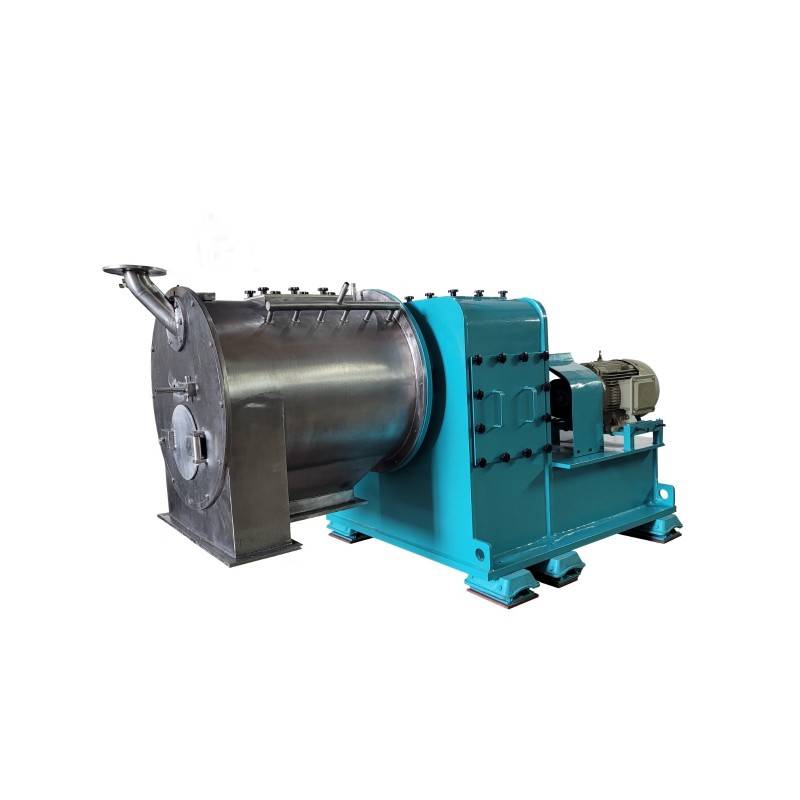
Direct answer
A centrifuge RFQ should state material and liquid identity, particle or settling behaviour, feed envelope, washing, required cake and liquid results, corrosion and containment, site utilities, controls, destination documents, test stages and attachments. Mark unknowns explicitly. A complete data sheet lets qualified sources respond on the same basis and exposes technical deviations before price comparison.
Material and liquid data
| Field | What to provide |
|---|---|
| Identity and composition | Solids, liquid, impurities, contaminants and SDS where applicable |
| Particle / solid behaviour | Distribution, shape, fragility, density, settling or filtration observations |
| Liquid properties | Density, viscosity method, pH, chlorides or corrosion contributors and temperature |
| Hazards | Flammable, toxic, corrosive, dusty, abrasive or biological hazards |
Process and feed envelope
| Field | What to provide |
|---|---|
| Flow and solids | Minimum, normal and maximum, with slurry or dry-solids basis |
| Operating mode | Batch or continuous, hours, campaigns and variability |
| Interfaces | Upstream equipment, pumps, downstream dryer or recovery |
| Washing | Required, liquid, sequence, ratio and target |
| Current route | Existing machine or method and main problem |
Required results
For cake moisture or dry solids, recovery, liquid clarity, purity, breakage and capacity, provide both the target and the proposed sampling and analytical method.
Equipment and site
- Preferred wetted materials and corrosion or abrasion requirements
- Indoor/outdoor, altitude and ambient range
- Area classification and containment or inerting needs
- Voltage, frequency, phase and available utilities
- PLC, protocol, control integration and upstream/downstream interlocks
- Layout, lifting, maintenance access and responsibility boundaries
Compliance and documents
Each selected requirement means “required by buyer — availability subject to source confirmation.” Do not convert a checkbox into a public claim.
Include requested material, NDT, welding, FAT, third-party inspection, SAT, commissioning, English manual and spare-parts records.
Conditional application data
| Condition | Additional data |
|---|---|
| Flammable solvent | Solvent, flash point, vapor hazard, zone/division, inerting, oxygen target and requested standard |
| CMC / cellulose ether | Solvent composition, wash stage, post-wash solids, rheology, alcohol recovery and nitrogen |
| Salt crystals | Mother liquor, PSD, shape, feed solids, wash, breakage, purity and cake target |
| Sludge / wastewater | TS/DS, suspended solids, flocculant and dose, cake DS, centrate quality and variability |
Files to attach
- Process data sheet
- P&ID
- Layout
- Process or current-equipment photos
- Current machine nameplate
- Lab report
- Particle-size report
- SDS
- Buyer specification
Submit the web data sheet
Industrial centrifuge technical RFQ
Use the live form to preserve source URL, process fields and private attachments.
A practical buyer decision path
Define
Application, specification, quantity, destination and evidence needs.
Compare
Align supplier responses, methods, exclusions and commercial basis.
Verify
Check the agreed company, product, document or on-site scope.
Control
Record samples, approvals, changes, inspection and shipment milestones.
Close
Deliver the agreed record, open-item list and next-step decision.
Why it matters
A normalized RFQ makes supplier proposals comparable and lets missing data remain visible. It also protects the buyer from model-first selection and undisclosed assumptions.
Buyer decision criteria
- Material identity is unambiguous
- Feed envelope has a clear basis
- Result methods are defined
- Hazards and containment inputs are supplied
- Site and controls are included
- Documents and test stages are listed
- Unknowns are flagged rather than invented
Specification checklist
| Group | Ready when |
|---|---|
| Material | Solids, liquid and safety data are traceable |
| Process | Minimum, normal, maximum and interfaces are defined |
| Results | Targets have sampling and methods |
| Equipment/site | Materials, hazards, controls and utilities are stated |
| Documents | Testing, compliance, manuals, spares and delivery records are listed |
Document checklist
- Controlled process and equipment data sheet with revision status
- Supplier technical offer and line-by-line deviation register
- General arrangement, interfaces, foundation information and utility list
- Wetted-material schedule and buyer-requested source evidence
- Motor, drive, instrument, interlock and control-system documents
- Inspection and test plan with hold or witness points
- Material-test, FAT and SAT protocols and records where included
- Operation, safety, cleaning and maintenance manuals in the agreed language
- Spare-parts, wear-parts, packing, preservation and shipment-document list
Common mistakes
- Sending only product name and capacity
- Omitting fines or feed variability
- Mixing slurry and dry-solids throughput
- Using undefined moisture or clarity methods
- Leaving area classification until after quotation
- Comparing price before technical deviations
Questions to ask suppliers
- Which submitted process inputs and representative tests support the proposed principle?
- Which assumptions, exclusions and open technical items remain?
- How are throughput, cake, recovery, liquid quality and wash results measured?
- Which wetted material applies to each component, and what evidence is available?
- What is demonstrated during material test, FAT and SAT respectively?
- Which drawings, manuals, inspection records, spares and commissioning services are included?
- Which buyer-requested conformity documents are available for this exact source and scope?
Related products and pages
Technical RFQ
Submit process, result, site and document inputs.
Frequently asked questions
Must every field be known before submission?
No. Mark unknown values clearly so the review can assign evidence or test actions.
Can files be uploaded privately?
Yes. The form supports approved document and image types stored outside the public media library.
Does selecting a compliance checkbox confirm availability?
No. It records a buyer requirement subject to source confirmation.
Is capacity slurry or dry solids?
State the basis explicitly and include composition and operating range.
Why include the current machine or method?
It helps identify the actual failure mode and prevents repeating an unsuitable basis.
What happens after submission?
The request is normalized, missing data are flagged and possible principles and private sources are reviewed.
Sources & references
GB 19815-2021, Centrifuge—Safety requirements, National Public Service Platform for Standards, published 2021-04-30, effective 2022-05-01, accessed 2026-09-07.
GB/T 10895-2025, Centrifuge & separator—Measurement and evaluation of mechanical vibration, National Public Service Platform for Standards, published 2025-08-01, effective 2026-02-01, accessed 2026-09-07.
Standards titles are cited for review context. A source-specific declaration, certificate or test record must still be checked for model, scope, revision, validity and project applicability.
Send us your sourcing requirement
Share the specification, quantity, destination and required documents. We will review the request before matching a suitable supply source.
Review and evidence note
Last reviewed: 2026-09-07
This guide provides non-numeric buyer controls. It does not confirm a supplier, machine size, material compatibility, certification or performance guarantee.
Final product availability, specification, documentation and commercial terms are confirmed during supplier matching and quotation.