
CMC application sourcing
Instant CMC for Faster Dispersion and Hydration
“Instant” is a process claim that must be defined. The useful grade is the one that disperses and reaches the required solution or formulation state inside the buyer’s real make-down window.
Sourcing Reference XTE-CMC-INST-001
Quick answer
Define “instant” as a measured dispersion and hydration target under stated water temperature, concentration, agitation, addition rate and hold time. Record lumps, fish-eyes, screen residue and the viscosity-development curve.
A rapidly dispersing sample may still require time to reach its final properties, and surface treatment or particle design can change the preferred addition sequence. Compare against standard CMC in the same application, not in separate idealized tests.
Define the make-down window
| Input | Record | Reason |
|---|---|---|
| Water | Temperature, hardness/ions, pH and volume | Controls wetting and hydration conditions |
| Addition | Powder rate, location and preblend or eductor use | Determines local concentration and lump risk |
| Agitation | Impeller, speed, vessel and time | Makes shear and circulation reproducible |
| Endpoint | Residue, viscosity curve and application-ready time | Turns “instant” into an auditable acceptance rule |
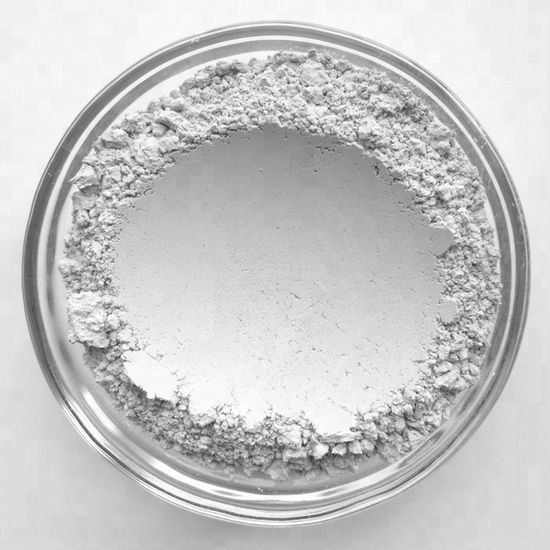
Powder, wetting and hydration test references

Key facts
- Sourcing reference: XTE-CMC-INST-001
- “Instant” must be tied to a defined test endpoint and process
- Dispersion time and full hydration time are not necessarily identical
- No universal dissolution time is claimed
Key purchasing specifications
The buyer should define powder behaviour and final solution performance in the same method.
| Parameter | RFQ definition | Buyer interpretation |
|---|---|---|
| Dispersion endpoint | Lump/residue method at a stated time | Measures initial wetting and powder distribution |
| Hydration curve | Viscosity readings at stated intervals and method | Shows when the solution becomes process-ready |
| Final viscosity | Full method after defined hydration | Confirms the finished solution target |
| Particle/surface profile | Supplier description plus buyer sieve or handling checks | Helps explain feed and wetting behaviour without assuming equivalence |
| Application result | Controlled formulation or process test | Confirms speed does not compromise the required function |
Typical applications
- Processes with constrained make-down time
- Cold-water or limited-shear systems after testing
- Continuous or semi-continuous batching where powder feeding is controlled
- Food or industrial uses only under the appropriate grade and market requirements
Available options
Availability depends on the selected supply source. Confirm every option during quotation.
- Candidate dispersion profiles
- Particle forms compatible with buyer feeding equipment
- Application-specific grade context
- Trial quantities subject to source confirmation
Quality and technical considerations
Test all candidates at equal concentration and under the same equipment geometry. Small beaker tests may not reproduce plant circulation or powder addition.
The underlying grade must still meet the identity, purity, safety and application requirements for its intended use.
Packaging and delivery
Specify liner, closure, moisture protection, particle handling, dust controls, bag weight, lot code, pallets and storage conditions.
Final packing and delivery terms are confirmed during quotation.
Documents buyers should request
Document availability varies by supply source and exact grade or configuration. We confirm the available document set before quotation.
- Controlled grade specification and TDS
- Lot COA with final-property methods
- Instant-dispersion or hydration test procedure and representative data where available
- SDS and handling guidance
- Source identity, traceability and change-notification information
Buyer checklist
- Define instant with a time and endpoint
- Provide make-down equipment and water conditions
- Measure both residue and viscosity development
- Confirm final application performance
- Lock the source and process-change notification
Common mistakes
- Using “fast dissolving” without a test method
- Confusing visible dispersion with full hydration
- Comparing beaker and plant results without scale controls
- Ignoring the supplier-recommended addition sequence
- Selecting speed while overlooking final application performance
What we need to quote
- Application and underlying grade requirements
- Water, concentration, temperature and chemistry
- Vessel, agitator, addition rate and sequence
- Dispersion, residue, hydration-curve and final-viscosity endpoints
- Sample and commercial quantity
- Packing, destination and documents
Related sourcing and trade services
Why source through XiangtanExport
XiangtanExport reviews the buyer requirement before matching a suitable source. We coordinate specifications, document requests, samples or material tests, quotation details and export follow-up while keeping factory-specific commercial information confidential.
XiangtanExport is an independent sourcing and export coordination service. It does not claim to own the factories represented by its sourcing network.
Related buyer guides

Frequently asked questions
Does instant CMC dissolve immediately?
Do not assume so. Define initial dispersion, visible residue and full hydration as separate measured endpoints.
Can instant CMC be used in every application?
No. The underlying grade must also meet the application, safety, regulatory and final-performance requirements.
How should samples be compared?
Use identical water, concentration, vessel, agitation, addition rate and measurement times, followed by the same application test.
Sources & references
This page defines a buyer test framework for dispersion and hydration. It does not publish a universal “instant” time or a source-specific treatment claim.
Exact test procedures and source data are checked privately during sample qualification.
Send us your sourcing requirement
Share the specification, quantity, destination and required documents. We will review the request before matching a suitable supply source.
Review and evidence note
Last reviewed: 2026-09-07
No universal dispersion or dissolution time is asserted. “Instant” must be verified under the buyer’s defined make-down conditions.
Final product availability, specification, documentation and commercial terms are confirmed during supplier matching and quotation.